A Boy’s Own Summer at Erzurum
Having stepped aside for Kutuzov’s excursion from our survey of the Russo-Turkish wars — from the Cumans to the Treaty of Bucharest — we return to them at the point where they arrive at Erzurum.
In 1827 Russia, Britain and France agreed to compel the Porte to grant autonomy to Greece, then fighting for independence, on condition of an annual tribute to the Sultan. Mahmud II declined to accommodate Greek national feeling, the combined fleets destroyed the Turco-Egyptian squadron in the Ionian Sea, and Nicholas I opened a land campaign on two fronts at once, Balkan and Caucasian. In 1828 the Russians reached Varna in Bulgaria and took Kars and Akhaltsikhe in Transcaucasia. In 1829 the Balkan army pushed on to Sofia, Philippopolis and Adrianople, the Caucasian army to Erzurum, and the fleet cut the supply route to Constantinople.
The Porte was obliged to accept the Treaty of Adrianople: the Danube delta and the eastern Black Sea coast to Russia, recognition of the Turkmanchay settlement with Persia and of Russian authority in Transcaucasia, respect for the autonomy of Serbia, Moldavia and Wallachia, and autonomy for Greece.
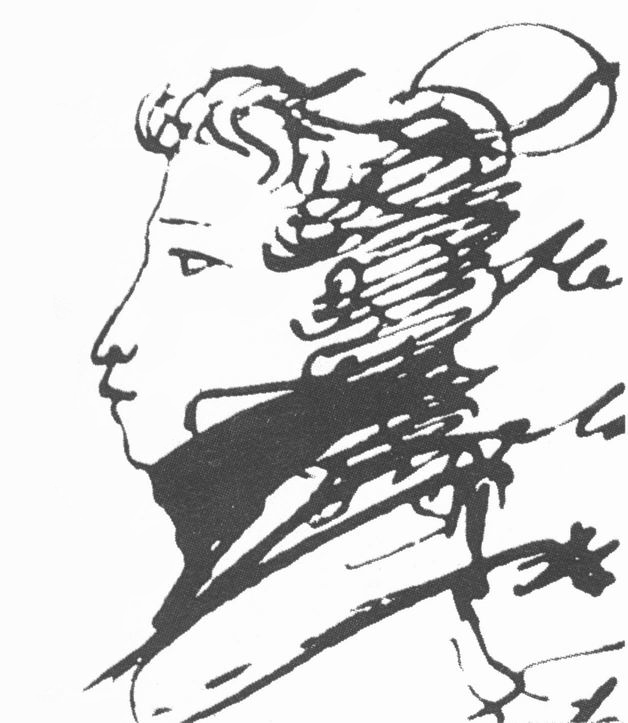
In 1829, while General Paskevich‘s Separate Caucasus Corps was taking Erzurum, it was joined by Alexander Pushkin — the sun of Russian poetry, as the obituaries would call him eight years later, here on what he seems to have regarded as a working holiday. A Journey to Arzrum grew out of the notebooks of that summer only six years later: written in 1835, printed in 1836. All three of our witnesses are, in fact, late. Pushchin set down his recollections in 1857; Brummer later still. The best way to read the Journey, as I have said before, is alongside Vikenty Veresaev’s Pushkin in Life, a biography assembled entirely out of other people’s testimony, in which every passage of Pushkin’s is shadowed by what the people standing next to him wrote down.
Here, then, is Pushkin approaching Erzurum.

We began to advance, but with great caution. A few days later, on my night patrol, I ran into the whole army of the seraskier,1 which had marched out of Hassan-Kaleh2 to meet us. When Pushkin was told of it, his African blood3 got the better of him and he began to leap about and clap his hands, saying that this time he would certainly come to grips with a Turk. He did not. Politeness kept him at Paskevich’s side, and Paskevich would not let him out of it — not during the action, not at halts, not in camp; he sent for him at every repos and in every free hour, and, by Pushkin’s account, thoroughly wore him out. To tell the truth, for all Pushkin’s desire to kill or at least thrash a Turk, there was no opportunity, since the enemy no longer attacked us but fled without looking back until the surrender, and all our engagements, so resounding in the dispatches, were pursuits of an enemy who abandoned his guns, his baggage, his camps and his stragglers along the road. Whenever we gathered, Pushkin at my quarters or at Rayevsky’s, he raged at the Turks for refusing to give him the battle he wanted.
On the eastern side of Arzrum, on the height of Top-Dagh, stood a Turkish battery. The regiments advanced upon it, answering the Turkish fire with drums and music. The Turks fled, and Top-Dagh was taken. […] On the abandoned battery we found Count Paskevich with his whole suite. From the height of the hill Arzrum opened to the view in the hollow below, with its citadel, its minarets, its green roofs pasted one upon another. […] Before him the Turkish deputies sat on the ground, having come with the keys of the city. But there was visible agitation in Arzrum. Suddenly fire flashed on the city rampart, smoke rose, and shot came flying towards Top-Dagh. Several passed over Count Paskevich’s head. “Voyez les Turcs,” he said to me, “on ne peut jamais se fier à eux.” At that moment Prince Bekovich galloped up to Top-Dagh, having been in Arzrum since the previous day negotiating. He announced that the seraskier and the people had long since agreed to surrender, but that a number of disobedient Arnauts4 under the command of Topchi Pasha had seized the city batteries and were in revolt. The generals rode up to the Count to ask leave to silence the Turkish guns. The Arzrum dignitaries, sitting under the fire of their own cannon, repeated the request. The Count hesitated a while; at last he gave the order, remarking, “Enough of this foolery.” The guns were brought up at once, they began to fire, and the enemy’s cannonade gradually died away.

Batteries had been built all round the city, and they opened a nearly harmless fire on us. Here I recall a somewhat comical incident. When the battery company had taken position and unlimbered, I followed with my own company to take up a place beside it. The commander-in-chief and his staff were there, mounted on a grey Turkmen horse; several officers were on foot; Pushkin stood alone in the open in front of the commander-in-chief. Suddenly, the first shot from the battery of the 21st Brigade. Pushkin cries out: “Splendid!” The commander-in-chief asks: “Where did it land?” Pushkin, turning to him: “Straight into the town!” — “Vile, not splendid,” said Ivan Fyodorovich.
It is worth pausing on who exactly was firing at whom.
The mutinous Arnauts are led by Topchi Pasha — not a name but an office: Turkish topçu, “gunner”, from top, “ball, cannonball”. And on the other side, in front of the Russian guns, jumping up and down and shouting “Splendid!”, stands a man called Pushkin — from the nickname Pushka, which is the Russian for cannon.
That word has travelled. Vasmer takes Russian pushka from Czech puška and Polish puszka, and those from Middle High German büchse, which comes from Latin buxis and ultimately from Greek πυξίς, a small box turned from boxwood. English has the same Greek word twice over: once as the pyx that holds the Host, and once, worn down past recognition, as the ordinary box. So the Turkish gun is named for what comes out of it and the Russian gun for what it looks like, which is to say a box — and the poet shouting at the Russian battery is, etymologically, a small wooden container.
Two gunners, then, facing one another across the valley. For one of them it was a rank; for the other it was a surname; and both were told off by their superiors before the afternoon was out.
- Turkish serasker, “vizier, commander of an army” — a hybrid: Persian ser, “head”, and Arabic عسكر ʿaskar, “army”. ↩︎
- Modern Pasinler, 38 km east of Erzurum. The name is connected with the ancient district of Phasiane, recorded from the fourth century BC (Xenophon), and with the Armenian Basean, whence Georgian Basiani. Identifying that Phasiane with the Georgian Phasis — the Rioni — remains disputed: ancient authors also apply “Phasis” to the headwaters of the Araxes. ↩︎
- Pushkin’s great-grandfather, Abram Gannibal, was an African brought to the court of Peter the Great; the poet was proud of the descent and made literary capital of it. ↩︎
- Albanians; Turkish Arnavut, from Greek Ἀρβανίτης. ↩︎


